Bridging the Gap Between Education and Employment
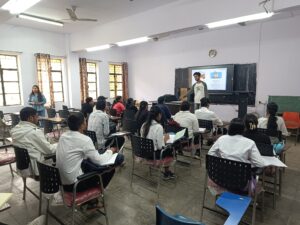
Introduction Every year, millions of young people in India complete their school or college education with the hope of building a stable and meaningful career. Yet, a large number of them struggle to take the first step into the world of work. This challenge highlights a critical national issue—the gap between education and employment. This gap is not simply about unemployment. It is about timing, preparedness, and awareness. While education builds knowledge, careers are built through skills, exposure, and early action. Understanding when to begin is just as important as understanding where to begin. Education and Employment: A Growing Disconnect India has one of the youngest populations in the world. According to data published by the Ministry of Statistics and Programme Implementation, a significant share of India’s population falls within the working-age group. However, government labour surveys consistently indicate that many educated youths remain unemployed or underemployed for extended periods after completing their studies. This situation points to a clear disconnect: As a result, many young people find themselves qualified on paper but unprepared for real job environments. Why the Right Time to Begin Matters? The transition phase immediately after education is the most critical stage of career development. This is the time when learning capacity is high, adaptability is strong, and long-term habits are formed. Delaying entry into the workforce while waiting for an “ideal” job often results in loss of confidence, skills, and momentum. Starting early allows young people to: The right time to begin growth is not after securing a high designation—it is when learning opportunities first appear. The Reality for Small and Middle-Class Youth Young people from small and middle-class families often face limited career exposure. Social pressure, financial responsibilities, and lack of guidance push them toward a narrow set of career choices. Government jobs or white-collar office roles are frequently seen as the only respectable options. However, official skill development assessments and workforce studies show that the Indian economy generates opportunities across multiple sectors, many of which do not require advanced degrees at the entry level. What they require is skill readiness, discipline, and willingness to learn. Retail Industry: An Accessible and Practical Starting Point The retail sector is one of India’s largest employment-generating industries. As per reports and workforce projections supported by the National Skill Development Corporation, retail and allied services continue to create large numbers of entry-level jobs each year, especially for youth aged 18–25. Retail roles provide practical exposure to: These competencies are transferable and remain valuable across industries such as logistics, hospitality, services, and sales. No Job Is Small When Skills Are Being Built There is a widespread misconception that entry-level roles—such as store assistant, office support staff, or operations helper—are “small jobs.” In reality, these roles offer complete visibility into how organisations function. They teach responsibility, punctuality, customer handling, and problem-solving at a practical level. Many long-term careers are built on foundations laid in such roles. Growth depends not on the size of the first job, but on the seriousness with which learning is approached. What Government Data Tells Us About Skills and Jobs Government-led surveys and skill assessments highlight three important realities: These findings clearly indicate that early skill exposure and workplace readiness are essential to closing the education–employment gap. The Cost of Waiting Waiting too long for the “perfect” opportunity often leads to missed learning years. Skills weaken without practice, and self-doubt increases. In contrast, starting early—even in a modest role—creates momentum. Early starters benefit from: A career is not harmed by starting small; it is harmed by not starting at all. Learning as the First Step to Growth Careers are built progressively. Entry-level roles are training grounds, not final destinations. Industries like retail provide structured environments where young people can learn professional behaviour, understand systems, and gradually take on greater responsibility. When learning becomes the priority, growth follows naturally. Conclusion The gap between education and employment is not permanent. It can be bridged with the right mindset and timely action. The most important decision a young person can make after completing education is not choosing the biggest opportunity, but choosing to begin. The right time to begin is when learning starts. By starting early, focusing on skill development, and remaining open to growth, young people can transform education into employment and effort into long-term progress.
AI can’t replicate humans, but they have power to create machine mind
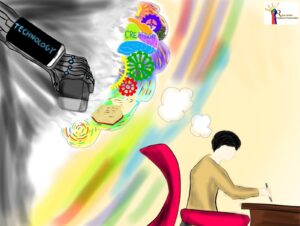
“The danger does not begin when we get help. The danger begins when we stop thinking” – by Sneh Kataria From Human Thinking to Machine Commanding Earlier, the natural human process looked like this: Now, for many people, the process has quietly shifted to: This change may appear minor, but its long-term impact is serious. Humans begin trusting machine-generated responses more than their own reasoning. Over time, this leads to reduced confidence, weakened critical thinking, and increasing dependency. AI does not force this shift. Humans choose convenience—and convenience, when it replaces consciousness, becomes a risk. What the Data Is Quietly Telling Us Multiple global surveys and studies conducted between 2022 and 2024 reveal worrying patterns in human behavior after widespread AI adoption: These numbers do not suggest that AI is harmful. They suggest that human thinking habits are changing—and not always in a healthy direction. Doubting Ourselves in the Name of Friendship AI is our friend, but sometimes in the name of friendship, we begin to doubt our own capability. Just like in human relationships, when we rely too much on a friend, we stop trusting our own judgment. We start acting according to their thinking, their style, and their decisions. The same pattern is visible with AI. Slowly, humans begin believing: This mindset creates a dangerous cycle: This is how humans do not get replaced by machines—but slowly become machine-like themselves. Real-Life Examples: Where the Problem Becomes Visible Education A student faces a difficult concept. Earlier, the student would struggle, ask questions, make mistakes, and finally understand. Today, many students directly ask AI for answers, essays, or explanations. The output looks perfect—but learning is missing. Over time, the student starts believing:“I cannot study or write without AI.” The real loss here is not marks.The real loss is thinking ability and self-belief. Workplace An employee faces a complex situation involving people, emotions, and real-world constraints. Instead of analyzing the situation, they depend fully on AI-generated solutions. When those solutions fail in reality—because real life cannot be fully predicted by data—confidence drops, and accountability weakens. AI did not fail.Human thinking was skipped. Loss of Individuality and Creativity Every human being has a unique way of thinking, working, and solving problems. That difference is our greatest strength. Machines operate on patterns; humans operate on experiences. When humans blindly follow AI-generated styles, ideas, and structures: Not because AI destroys creativity—but because humans stop exercising it. A society where everyone thinks alike may appear efficient, but it becomes fragile. Innovation requires difference. Progress requires questioning. AI Cannot Replace Humans—but It Can Shape Them AI does not feel emotions.It does not understand social inequality, ethical dilemmas, or lived struggles.It cannot replace empathy, moral responsibility, or wisdom. But AI can shape how humans think—if humans allow it. When humans stop questioning and start obeying machine logic, machine minds are created—not inside machines, but inside people. The Future: Fast or Thoughtful? AI is undoubtedly part of the future. But the real question is not whether AI will grow. The real question is:Will humans continue to think? A future without thinking may be fast—but shallow.Efficient—but emotionally disconnected.Automated—but ethically weak. Thinking should never stop.Progress without thinking is not progress—it is automation without wisdom. The Solution: Change the Process, Not the Tool The solution is not to reject AI.The solution is to use it consciously. A healthy human-centered process is: AI should come after thinking—not before it. An NGO and Social Development Perspective From a social sector perspective, this issue is critical. Communities already facing inequality, limited access, and lack of confidence cannot afford to lose their thinking power. Empowerment begins with awareness and self-belief—not blind technological dependence. Technology should strengthen humans, not replace their judgment.Social change is driven by thinking humans, not intelligent machines. Conclusion: Stay Human in an AI World Is AI the problem? No.But hidden inside the solution is a problem—if humans stop thinking. AI is our friend.But a friend should make us stronger, not dependent. AI cannot replicate humans—but it has the power to create machine minds if we allow it. The future must belong to thinking humans who use AI wisely, not humans who stop thinking because of it.
Bridging the Gap Between Education and Employment
Introduction Every year, millions of young people in India complete their school or college education with the hope of building a stable and meaningful career. Yet, a large number of them struggle to take the first step into the world of work. This challenge highlights a critical national issue—the gap between education and employment. This gap is not simply about unemployment. It is about timing, preparedness, and awareness. While education builds knowledge, careers are built through skills, exposure, and early action. Understanding when to begin is just as important as understanding where to begin. Education and Employment: A Growing Disconnect India has one of the youngest populations in the world. According to data published by the Ministry of Statistics and Programme Implementation, a significant share of India’s population falls within the working-age group. However, government labour surveys consistently indicate that many educated youths remain unemployed or underemployed for extended periods after completing their studies. This situation points to a clear disconnect: As a result, many young people find themselves qualified on paper but unprepared for real job environments. Why the Right Time to Begin Matters? The transition phase immediately after education is the most critical stage of career development. This is the time when learning capacity is high, adaptability is strong, and long-term habits are formed. Delaying entry into the workforce while waiting for an “ideal” job often results in loss of confidence, skills, and momentum. Starting early allows young people to: The right time to begin growth is not after securing a high designation—it is when learning opportunities first appear. The Reality for Small and Middle-Class Youth Young people from small and middle-class families often face limited career exposure. Social pressure, financial responsibilities, and lack of guidance push them toward a narrow set of career choices. Government jobs or white-collar office roles are frequently seen as the only respectable options. However, official skill development assessments and workforce studies show that the Indian economy generates opportunities across multiple sectors, many of which do not require advanced degrees at the entry level. What they require is skill readiness, discipline, and willingness to learn. Retail Industry: An Accessible and Practical Starting Point The retail sector is one of India’s largest employment-generating industries. As per reports and workforce projections supported by the National Skill Development Corporation, retail and allied services continue to create large numbers of entry-level jobs each year, especially for youth aged 18–25. Retail roles provide practical exposure to: These competencies are transferable and remain valuable across industries such as logistics, hospitality, services, and sales. No Job Is Small When Skills Are Being Built There is a widespread misconception that entry-level roles—such as store assistant, office support staff, or operations helper—are “small jobs.” In reality, these roles offer complete visibility into how organisations function. They teach responsibility, punctuality, customer handling, and problem-solving at a practical level. Many long-term careers are built on foundations laid in such roles. Growth depends not on the size of the first job, but on the seriousness with which learning is approached. What Government Data Tells Us About Skills and Jobs Government-led surveys and skill assessments highlight three important realities: These findings clearly indicate that early skill exposure and workplace readiness are essential to closing the education–employment gap. The Cost of Waiting Waiting too long for the “perfect” opportunity often leads to missed learning years. Skills weaken without practice, and self-doubt increases. In contrast, starting early—even in a modest role—creates momentum. Early starters benefit from: A career is not harmed by starting small; it is harmed by not starting at all. Learning as the First Step to Growth Careers are built progressively. Entry-level roles are training grounds, not final destinations. Industries like retail provide structured environments where young people can learn professional behaviour, understand systems, and gradually take on greater responsibility. When learning becomes the priority, growth follows naturally. Conclusion The gap between education and employment is not permanent. It can be bridged with the right mindset and timely action. The most important decision a young person can make after completing education is not choosing the biggest opportunity, but choosing to begin. The right time to begin is when learning starts. By starting early, focusing on skill development, and remaining open to growth, young people can transform education into employment and effort into long-term progress.
AI can’t replicate humans, but they have power to create machine mind
“The danger does not begin when we get help. The danger begins when we stop thinking” – by Sneh Kataria From Human Thinking to Machine Commanding Earlier, the natural human process looked like this: Now, for many people, the process has quietly shifted to: This change may appear minor, but its long-term impact is serious. Humans begin trusting machine-generated responses more than their own reasoning. Over time, this leads to reduced confidence, weakened critical thinking, and increasing dependency. AI does not force this shift. Humans choose convenience—and convenience, when it replaces consciousness, becomes a risk. What the Data Is Quietly Telling Us Multiple global surveys and studies conducted between 2022 and 2024 reveal worrying patterns in human behavior after widespread AI adoption: These numbers do not suggest that AI is harmful. They suggest that human thinking habits are changing—and not always in a healthy direction. Doubting Ourselves in the Name of Friendship AI is our friend, but sometimes in the name of friendship, we begin to doubt our own capability. Just like in human relationships, when we rely too much on a friend, we stop trusting our own judgment. We start acting according to their thinking, their style, and their decisions. The same pattern is visible with AI. Slowly, humans begin believing: This mindset creates a dangerous cycle: This is how humans do not get replaced by machines—but slowly become machine-like themselves. Real-Life Examples: Where the Problem Becomes Visible Education A student faces a difficult concept. Earlier, the student would struggle, ask questions, make mistakes, and finally understand. Today, many students directly ask AI for answers, essays, or explanations. The output looks perfect—but learning is missing. Over time, the student starts believing:“I cannot study or write without AI.” The real loss here is not marks.The real loss is thinking ability and self-belief. Workplace An employee faces a complex situation involving people, emotions, and real-world constraints. Instead of analyzing the situation, they depend fully on AI-generated solutions. When those solutions fail in reality—because real life cannot be fully predicted by data—confidence drops, and accountability weakens. AI did not fail.Human thinking was skipped. Loss of Individuality and Creativity Every human being has a unique way of thinking, working, and solving problems. That difference is our greatest strength. Machines operate on patterns; humans operate on experiences. When humans blindly follow AI-generated styles, ideas, and structures: Not because AI destroys creativity—but because humans stop exercising it. A society where everyone thinks alike may appear efficient, but it becomes fragile. Innovation requires difference. Progress requires questioning. AI Cannot Replace Humans—but It Can Shape Them AI does not feel emotions.It does not understand social inequality, ethical dilemmas, or lived struggles.It cannot replace empathy, moral responsibility, or wisdom. But AI can shape how humans think—if humans allow it. When humans stop questioning and start obeying machine logic, machine minds are created—not inside machines, but inside people. The Future: Fast or Thoughtful? AI is undoubtedly part of the future. But the real question is not whether AI will grow. The real question is:Will humans continue to think? A future without thinking may be fast—but shallow.Efficient—but emotionally disconnected.Automated—but ethically weak. Thinking should never stop.Progress without thinking is not progress—it is automation without wisdom. The Solution: Change the Process, Not the Tool The solution is not to reject AI.The solution is to use it consciously. A healthy human-centered process is: AI should come after thinking—not before it. An NGO and Social Development Perspective From a social sector perspective, this issue is critical. Communities already facing inequality, limited access, and lack of confidence cannot afford to lose their thinking power. Empowerment begins with awareness and self-belief—not blind technological dependence. Technology should strengthen humans, not replace their judgment.Social change is driven by thinking humans, not intelligent machines. Conclusion: Stay Human in an AI World Is AI the problem? No.But hidden inside the solution is a problem—if humans stop thinking. AI is our friend.But a friend should make us stronger, not dependent. AI cannot replicate humans—but it has the power to create machine minds if we allow it. The future must belong to thinking humans who use AI wisely, not humans who stop thinking because of it.

Education: The Investment with Unlimited Returns
Education is too often treated like an expense on a household ledger. What if we begin to see it instead as the highest-return investment a family can make? When knowledge, guidance and opportunity are combined, the returns are not incremental — they are transformational. At Raise Action Empower Foundation, we work with families, schools and communities to ensure that every rupee, every hour and every encouragement put into learning multiplies into skills, confidence and dignity. Why this shift in perspective matters Treating education as an investment changes choices. It shifts conversations at home from “Can we afford this?” to “How will this open doors?” It changes policy priorities from short-term cost-cutting to long-term capacity building. It alters how communities allocate time and attention — investing in the development of a child’s curiosity, critical thinking, and emotional resilience rather than only measuring immediate exam scores. What true return on education looks like The returns are visible in many forms: increased employability, the ability to start and sustain small enterprises, healthier family decisions, civic participation, and the confidence to imagine alternative futures. These outcomes compound across generations. A child who gains a reliable education is more likely to raise children who do the same, creating a cascade of social and economic benefits. In real terms, what may look like a modest outlay today becomes multiplied opportunity tomorrow — for the individual, the household, and the community. How we turn investment into impact At Raise Action Empower Foundation we focus not just on access, but on quality and relevance. Access opens the door, quality learning ensures the learner walks through it prepared. Relevance connects learning to livelihood, life skills and agency. Our approach is built around three pillars: Diagnose and design: We begin with an empathetic assessment of learners’ strengths, barriers and aspirations — not with assumptions. Interventions are designed to meet real needs, whether remedial support, foundational literacy and numeracy, career guidance or soft-skills training. Local partnerships: Sustainable change happens with trusted local partners — parents, teachers, community leaders and local institutions. We co-create programs that fit cultural contexts and use existing community assets, so initiatives are owned locally and sustained beyond a single funding cycle. Measurable outcomes: We set clear, realistic targets and track progress. Learning gains, attendance, retention, livelihood linkages and psychosocial indicators are part of how we evaluate success. This focus on evidence ensures every resource is contributing toward tangible returns. A call to think bigger — and act wiser If we accept that education is an investment, then every stakeholder has a role. Families can prioritize consistent learning routines and career conversations. Schools can align teaching with practical pathways. Funders and policymakers can prioritize sustained, evidence-driven programs over short bursts of activity. Corporates and mentors can partner to create apprenticeship and exposure pathways that turn classroom learning into meaningful work. For donors and policymakers: consider multi-year commitments that allow programs to iterate, improve and scale. For educators: combine subject teaching with life skills and career awareness so learners can translate knowledge into opportunity. For community leaders and parents: create environments where learning is supported, encouraged and celebrated. Stories that prove the point We have met students who began with low confidence and limited resources but, through targeted remedial coaching and mentorship, discovered aptitudes and interests they had never imagined. Some went on to vocational training and steady work; others returned to mentor peers. The investment made by families — sometimes small and sacrificial — produced outcomes that benefited entire households. These are not isolated anecdotes; they are the kind of multiplied returns we see when education is pursued with clarity and purpose. Closing thought When families, educators and communities begin to view education as a strategic investment — one that yields social, economic and human returns — we change not only individual life trajectories but the structure of opportunity itself. At Raise Action Empower Foundation we are committed to turning this belief into practice: designing interventions that respect context, measure impact and scale what works. If we think bigger about education and use our resources more wisely, the return will not be merely financial; it will be a generational change in capability, dignity and choice. If you care about shaping futures that last, join us. Share your ideas, partner with us, or learn more about our programs. Together we can redirect resources from short-term fixes to long-term empowerment. — Raise Action Empower Foundation (Connect with us to learn how small investments today create exponential returns tomorrow.)